
 ultimate-guide
B12 Shots: Benefits, Side Effects & Dosage Guide
Table of Contents
- What Are B12 Shots and How Do They Work?
- Vitamin B12 Deficiency Symptoms You Should Know
- Who Should Get B12 Shots? Medical Uses and Indications
- How Often to Get B12 Shots: Dosage and Frequency
- B12 Injection Side Effects and Safety Considerations
- Do B12 Shots Actually Help with Energy and Weight Loss?
- Conclusion
Last Updated: August 18, 2026
What Are B12 Shots and How Do They Work?
B12 shots are intramuscular or subcutaneous injections of vitamin B12, a water-soluble vitamin essential for red blood cell formation, nerve function, and DNA synthesis. Unlike oral supplements, injections bypass the gastrointestinal tract entirely, delivering the vitamin directly into muscle tissue at near-complete bioavailability. This makes B12 shots the preferred clinical route for patients who cannot absorb the vitamin through normal digestion.
Your body's ability to absorb dietary B12 depends on intrinsic factor, a protein produced in the stomach lining. When intrinsic factor is absent or impaired, oral supplementation fails regardless of dose. Injections sidestep this limitation completely. At Buy-Otc.com, we supply injectable B12 and the medical supplies needed for self-administration, serving patients who require consistent, affordable access to their regular protocol.
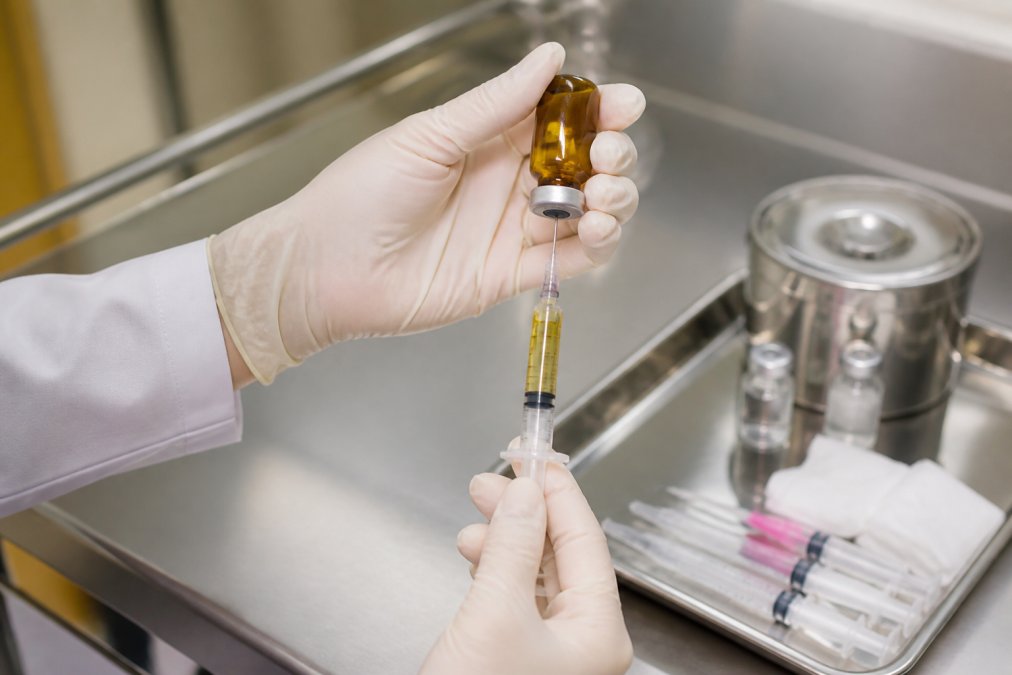
According to National Institutes of Health Office of Dietary Supplements B12 fact sheet, vitamin B12 is involved in the metabolism of every cell in the human body, with particular importance for neurological function and red blood cell formation. Deficiency develops slowly, which is why many patients don't recognize symptoms until levels are significantly depleted.
Cyanocobalamin vs. Hydroxocobalamin: Which Form Is Used?
Cyanocobalamin is the most widely used synthetic form. It's stable, inexpensive, and well-studied. The body converts it to the active coenzyme forms methylcobalamin and adenosylcobalamin. For most patients, cyanocobalamin injections are the standard of care.
Hydroxocobalamin is a naturally occurring form with a longer half-life in the body, meaning it stays active in circulation longer between doses. It's preferred in some clinical settings, particularly for patients with certain metabolic conditions or those needing less frequent dosing.
For routine B12 deficiency treatment, either form works effectively. The choice often comes down to availability, cost, and prescriber preference.
Vitamin B12 Deficiency Symptoms You Should Know
Vitamin B12 deficiency symptoms develop gradually and can become irreversible if left untreated long enough, making early recognition clinically important.
Common symptoms include:
- Persistent fatigue and weakness - bone-deep exhaustion that doesn't resolve with sleep
- Neurological symptoms - tingling or numbness in the hands and feet
- Cognitive changes - difficulty concentrating, memory lapses, and in severe cases, confusion
- Megaloblastic anemia - abnormally large red blood cells that carry oxygen inefficiently
- Glossitis and mouth sores - inflammation of the tongue and painful ulcers
- Balance and coordination problems - a sign of advanced neurological involvement
- Pale or jaundiced skin - resulting from fragile red blood cells
- Vision disturbances - in severe cases, optic nerve damage can occur

Neurological symptoms deserve particular attention. Unlike anemia, which often reverses with treatment, nerve damage from prolonged B12 deficiency can be permanent. Early intervention with B12 shots is specifically indicated when neurological symptoms are present.
How to Interpret Your Blood Test Results
Most clinicians measure serum B12 levels as the first-line test. A serum level below 200 pg/mL is generally considered deficient, while levels between 200-300 pg/mL fall into a gray zone where symptoms may still be present.
Two additional tests provide sharper clinical clarity. Methylmalonic acid (MMA) rises when B12 is functionally deficient at the cellular level, reflecting whether the vitamin is actually working in your metabolism. Homocysteine is another functional marker; elevated levels suggest B12 deficiency and carry independent cardiovascular risk.
If your serum B12 sits in the 200-300 pg/mL range and you have symptoms, ask your physician about ordering MMA and homocysteine before concluding you're fine. As documented in Mayo Clinic Laboratories reference ranges for vitamin B12 testing, functional markers frequently reveal deficiency that serum levels alone miss.
Who Should Get B12 Shots? Medical Uses and Indications
B12 shots are clinically indicated for specific patient populations, not as a general wellness supplement. The clearest medical indications include:
- Pernicious anemia - an autoimmune condition that destroys cells producing intrinsic factor
- Malabsorption conditions - Crohn's disease, celiac disease, and other gastrointestinal disorders
- Post-surgical patients - those who have undergone gastric bypass or procedures affecting the stomach or ileum
- Metformin users - long-term use is associated with reduced B12 absorption
- Older adults - gastric atrophy reduces intrinsic factor production
- Strict dietary restriction - vegans and vegetarians with confirmed deficiency
B12 shots are a therapeutic intervention for confirmed deficiency, not a preventive supplement for people with adequate serum levels.
Vegan and Vegetarian Protocols
Vegans and vegetarians face a structural problem: dietary B12 exists almost exclusively in animal products. This makes deficiency not a possibility but a near-certainty over time without supplementation.
For those with confirmed deficiency, B12 shots offer the fastest route to normalization. A common loading protocol involves frequent injections over several weeks to rapidly replete stores, followed by maintenance injections. Once levels stabilize, some practitioners transition vegan patients to high-dose oral cyanocobalamin, which can compensate for absent intrinsic factor through passive diffusion at very high doses. However, patients with ongoing malabsorption should remain on injectable maintenance therapy indefinitely.
Vegans with no current deficiency should supplement consistently with oral B12 and monitor serum levels annually. Injections become appropriate if levels decline despite supplementation or if neurological symptoms develop.
How Often to Get B12 Shots: Dosage and Frequency
How often to get B12 shots depends entirely on the underlying cause of deficiency and severity of depletion at diagnosis.
| Clinical Scenario | Loading Phase | Maintenance Phase |
|---|---|---|
| Pernicious anemia | Daily or every other day x 2 weeks | Monthly for life |
| Dietary deficiency (vegan) | Weekly x 4-8 weeks | Monthly or quarterly |
| Post-bariatric surgery | Weekly x 4 weeks | Monthly |
| Neurological involvement | Daily x 2 weeks minimum | Monthly for life |
| Borderline deficiency, mild symptoms | Weekly x 4 weeks | Every 1-3 months |
The loading phase rapidly replenishes depleted stores. B12 is stored primarily in the liver, and those stores can take months to fully restore after severe deficiency. Rushing to maintenance dosing before stores are replenished is a common clinical mistake.
Therapeutic dose per injection is typically 1,000 mcg (1 mg) of cyanocobalamin or hydroxocobalamin. Higher doses are not more effective for most patients since excess water-soluble vitamins are excreted through urine.
Self-Administration vs. Clinical Administration
Self-administration of B12 shots is common, well-established, and appropriate for many patients. Intramuscular injection technique is straightforward to learn, and subcutaneous injection is even simpler. Many patients who require lifelong maintenance therapy find that self-administration saves significant time and cost compared to recurring clinical visits.
For self-administration, you'll need a prescription for injectable B12, along with appropriate needles and syringes. Intramuscular injections are typically administered into the outer thigh or deltoid muscle. Subcutaneous injections go into the fatty tissue of the abdomen or outer thigh. Clinical administration is appropriate for initial loading phases, for patients uncomfortable with self-injection, and for those whose insurance covers office visits.
Most patients report that after the first two or three injections, the process takes under five minutes and produces no more discomfort than a standard blood draw.
:::takeaway Self-administration is a practical long-term option for most maintenance patients. Confirm the injection technique with your healthcare provider before your first self-administered dose, and source your supplies from a reliable supplier with proper product verification.
B12 Injection Side Effects and Safety Considerations
B12 shots have a favorable safety profile. Vitamin B12 is water-soluble, meaning excess amounts are excreted rather than stored to toxic levels. Serious adverse reactions are rare but real.
Common, minor side effects:
- Injection site pain, redness, or mild swelling
- Mild diarrhea or nausea shortly after injection
- Headache in the first day or two
- Temporary flushing or warmth
Less common but clinically significant:
- Hypokalemia - when severe B12 deficiency is treated aggressively, rapid red blood cell production can cause a drop in potassium levels. Patients with pre-existing cardiac conditions should have potassium monitored during initial loading.
- Acne flares - cyanocobalamin has been associated with acne exacerbation in susceptible individuals. Hydroxocobalamin may be a better alternative.
- Anaphylaxis - extremely rare, but B12 injections carry a small risk of severe allergic reaction. First injections should ideally be administered in a clinical setting.
According to FDA prescribing information for cyanocobalamin injection, patients with Leber's hereditary optic neuropathy should not use cyanocobalamin, as it can accelerate optic nerve degeneration.
Interactions with Common Medications
B12 absorption and metabolism can be affected by several commonly prescribed drugs.
Metformin (used for type 2 diabetes) reduces B12 absorption by interfering with calcium-dependent uptake in the ileum. Long-term metformin users should have B12 levels checked annually.
Proton pump inhibitors (PPIs) like omeprazole and lansoprazole, and H2 blockers like famotidine, reduce stomach acid production. Since stomach acid is needed to release B12 from food proteins, long-term use can cause gradual B12 depletion.
Colchicine (used for gout) and chloramphenicol (an antibiotic) can also impair B12 absorption. Nitrous oxide (used in anesthesia and dental procedures) inactivates vitamin B12 in the body. Patients with borderline B12 levels who undergo procedures using nitrous oxide are at risk of acute neurological complications.
If you take any of these medications regularly, discuss B12 monitoring with your physician.
Do B12 Shots Actually Help with Energy and Weight Loss?
For energy: B12 shots genuinely improve energy levels in people who are deficient. Fatigue is a hallmark symptom of B12 deficiency, and correcting that deficiency produces real improvement in energy and cognitive clarity. However, if your B12 levels are already normal, injections will not boost your energy. You cannot supercharge a system that's already running at capacity.
For weight loss: The evidence is thin. B12 shots are sometimes marketed as "lipotropic" injections for fat metabolism, but there is no credible clinical evidence that B12 injections cause meaningful weight loss in people who are not deficient. B12 shots are not a weight loss treatment.
What they are is a legitimate, effective therapy for a condition that affects a significant portion of the adult population, often undiagnosed.
For patients who self-administer as part of a confirmed treatment protocol, sourcing reliable injectable B12 and appropriate medical supplies matters. Buy-Otc.com carries injectable vitamins and the supplies needed for self-administration, with GeoTrust SSL protection and five-star customer service for patients who need a dependable online source.
Frequently Asked Questions
What does a B12 shot do for you?
A B12 shot delivers cyanocobalamin or hydroxocobalamin directly into muscle or subcutaneous tissue, bypassing the digestive tract entirely. This makes it far more effective than oral supplements for people with malabsorption issues, pernicious anemia, or low intrinsic factor. The injected vitamin supports red blood cell formation, nerve function, energy production, and cognitive health. People with confirmed vitamin B12 deficiency typically see the most measurable improvement in fatigue and neurological symptoms.
How quickly do you feel the effects of a B12 injection?
Some people notice improved energy within 24 to 72 hours of their first B12 shot, particularly if their serum levels were significantly low. Neurological symptoms tied to vitamin B12 deficiency, such as tingling or cognitive fog, take longer to resolve and may require several weeks of maintenance therapy. People with normal B12 levels who receive shots for non-deficiency reasons are less likely to notice a rapid or dramatic change.
Are there any side effects associated with B12 shots?
B12 injection side effects are generally mild. The most common is injection site pain, redness, or swelling. Less frequently, people report mild diarrhea, itching, or a feeling of swelling across the body. Serious adverse reactions, including anaphylaxis or hypokalemia, are rare but possible. Anyone with a known allergy to cobalamin compounds should discuss alternatives with their doctor before starting injections. Always source injectables from a verified, reputable supplier.
Who is the ideal candidate for B12 injection therapy?
The strongest candidates are people with confirmed vitamin B12 deficiency caused by pernicious anemia, gastrointestinal issues like Crohn's disease or gastric bypass, or strict vegan and vegetarian diets with minimal dietary intake of animal products. Older adults absorb B12 less efficiently and often benefit from injections over oral supplementation. People taking metformin or long-term proton pump inhibitors may also have reduced B12 absorption and should have their serum levels checked regularly.
Managing a confirmed B12 deficiency requires consistent access to quality injectable supplies, and gaps in that supply chain directly affect your treatment continuity. Buy-Otc.com offers a reliable source for injectable B12 and medical supplies at competitive prices, backed by industry-standard security and a customer service team committed to resolving issues quickly. Shop right now at Buy-Otc.com and keep your treatment protocol on track without the pharmacy markup.
This article was written using GrandRanker
Frequently Asked Questions
What does a B12 shot do for you?
A B12 shot delivers cyanocobalamin or hydroxocobalamin directly into muscle or subcutaneous tissue, bypassing the digestive tract entirely. This makes it far more effective than oral supplements for people with malabsorption issues, pernicious anemia, or low intrinsic factor. The injected vitamin supports red blood cell formation, nerve function, energy production, and cognitive health. People with confirmed vitamin B12 deficiency typically see the most measurable improvement in fatigue and neurological symptoms.
How quickly do you feel the effects of a B12 injection?
Some people notice improved energy within 24 to 72 hours of their first B12 shot, particularly if their serum levels were significantly low. Neurological symptoms tied to vitamin B12 deficiency, such as tingling or cognitive fog, take longer to resolve and may require several weeks of maintenance therapy. People with normal B12 levels who receive shots for non-deficiency reasons are less likely to notice a rapid or dramatic change.
Are there any side effects associated with B12 shots?
B12 injection side effects are generally mild. The most common is injection site pain, redness, or swelling. Less frequently, people report mild diarrhea, itching, or a feeling of swelling across the body. Serious adverse reactions, including anaphylaxis or hypokalemia, are rare but possible. Anyone with a known allergy to cobalamin compounds should discuss alternatives with their doctor before starting injections. Always source injectables from a verified, reputable supplier.
Who is the ideal candidate for B12 injection therapy?
The strongest candidates are people with confirmed vitamin B12 deficiency caused by pernicious anemia, gastrointestinal issues like Crohn's disease or gastric bypass, or strict vegan and vegetarian diets with minimal dietary intake of animal products. Older adults absorb B12 less efficiently and often benefit from injections over oral supplementation. People taking metformin or long-term proton pump inhibitors may also have reduced B12 absorption and should have their serum levels checked regularly.